

Recent articles about using experiential learning in less familiar contexts highlighted risk taking and resilience as important team development areas. They explored how to sensitise teams to the need for change and how strategies might be modified to achieve improved performance and results.
However, in team-based programmes resulting in recommendations for change two factors are frequently overlooked: the emotion involved in making behavioural change and the diversity of personality, thought and preference that means every individual must find ways of making the change work for them.
We are all aware that emotion drives behaviour. Changing behaviour, so that the change is acceptable, sustainable and satisfying, is an emotional and intensely personal process. The changes must fit with an individual's environment, beliefs, capabilities and sense of identity. Whilst the world, and the online world in particular, is awash with quick fix solutions ( to improve sleep, reduce stress, learn to relax, exercise more effectively, boost your immune system....) in reality there are no universal and simple ways to make change happen and stick.
This challenging process can benefit significantly from structured support in a 1-1 relationship of trust and openness. A coaching approach which uses the best principles of experiential learning is ideal. Let's look at three different coaching models - all different but centering on finding out what individuals have learnt from experience, what they believe about themselves and what they really want moving forward.
1. The COM-B Framework in Coaching
The COM-B Model was developed by Susan Michie, Maartje van Stralen, and Robert West in 2011 to create a more comprehensive framework for understanding and influencing behaviour change. It addresses three key questions.
- Capability: Does the person have the physical skills and psychological knowledge needed?
- Opportunity: Does their external environment, physical space, or social circle allow the behaviour to happen?
- Motivation: Do their internal thought processes, habits, and desires drive them to choose this behaviour over others?
2. The Stages of Change model, also known as the Transtheoretical Model (TTM) Developed by psychologists James Prochaska and Carlo DiClemente, it shows that change is a gradual process with five or six main steps: precontemplation, contemplation, preparation, action, maintenance, and sometimes relapse.
3. Motivational interviewing (MI) A collaborative, goal-oriented communication style designed to help people explore and resolve mixed feelings (ambivalence) about behavioural change. A practitioner acts as an empathetic guide to draw out a person's own internal reasons and commitment to change.
- Partnership: Working together on equal terms rather than expert-versus-patient
- Acceptance: Honouring the person's autonomy, worth, and perspective
- Compassion: Acting in the best interest of the individual
- Evocation: Drawing out the person’s own ideas and desire for change
As you explore these, or any similar coaching models, it becomes obvious how the thinking skills developed whilst using the experiential learning model are closely linked.
The learning cycle involves taking a personal experience, reflecting upon it and noticing its effects in ways that may not have happened in the heat of the moment. It involves questions about choices made, decisions enacted, the feelings those generated and that effects they had. This is vital in the early stages of a coaching process to ensure that the individuals are aware of their current situations, preferred behaviours and the impact of those.
The learning cycle then moves towards deepening understanding of what needs to change and why , exploring the benefits and costs of making these changes. (Conceptualisation)
Finally, the cycle moves towards a determination of actions - how to initiate and maintain the desired change. (Application)
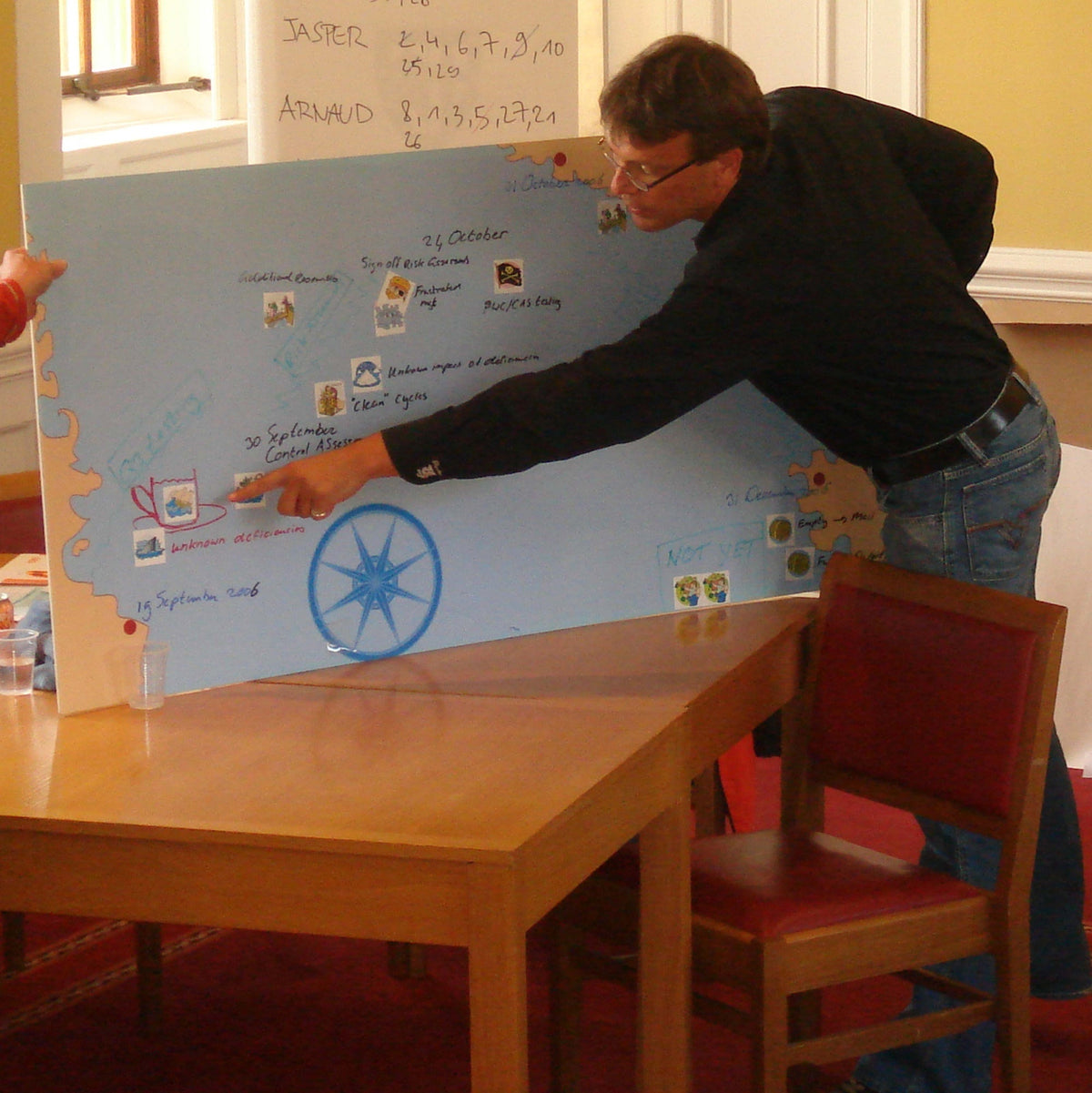
All excellent coaching models include these elements and focus on individual awareness, perspective, capability and motivation. Most rely significantly on question and response. However, for some people, extra support may come from working with additional resources. From time to time, the introduction of a structured activity (such as RSVP Design's Images of Resilience or Voyage Mapping) may help to focus on, and clarify, key personal issues in an environment of enhanced emotional safety. Talking through the filter of a picture can be easier than simply responding to questions.
In my next three articles will explore in more detail activities that can build confidence and commitment to behaviour change in sensitive, and sometimes frightening areas such as resilience and managing stress, risk taking and tackling difficult conversations.


