

We are all living through rapidly changing times. The need to change and adapt what we do can load pressure onto us more rapidly than it has ever done.
As technology changes at pace there is a constant need to 'update our systems' - and this means not just our computer and phone hardware and software but also our personal thinking systems and the behaviours that have been successful for us in the past. The pace of change is exhausting and for many people the changes that are brought about by AI, for example, are also threatening to their jobs, career choices and personal lifestyles. Being asked to change known and trusted behaviours to deal with increasing uncertainty may seem counter-intuitive and there can also be a sense of, "Why make the effort to change my thinking and behaviour now, when it will all be different again next week?"
In this type of environment, having some personal clarity about goals and priorities becomes really important. It isn't enough to think you should change behaviour because someone else says so or because those around you are doing things differently. You need to be be able to answer a whole set of questions that are personal to you, in order to choose and commit to behavioural change that is transformative and sustainable. As I mentioned in the previous article, a coaching process supported by experiential learning tools can be valuable in easing this process.
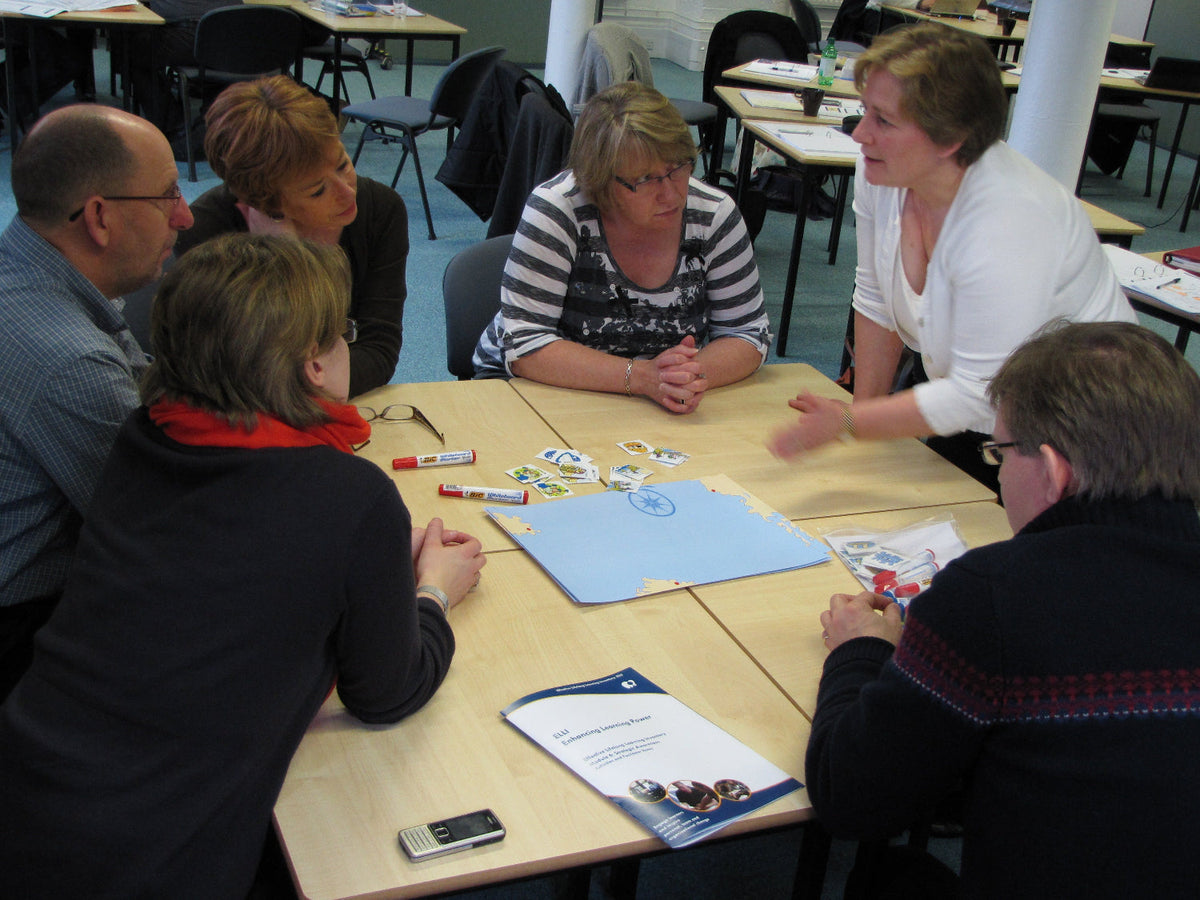
The Voyage Mapping: Individual Coaching activity from RSVP Design Ltd is a set of resources that allows individuals to work with a powerful journey metaphor for exploring learning from the past and preparing for future challenges. The activity can be used in a self or external coaching process to enable participants to review past experiences undertaken and identify successes and failures and then to 'map out' their anticipated future. As the learner contemplates a future and personal journey, a coach can work with the imagery to focus on important elements that may make the difference between a vaguely defined intention and an actual process for future behaviour change.
Cartoon style images generate thought and discussion around important questions, such as:
What does the end point of this journey actually look like? How will I know when I've arrived at my destination?
What is the hidden treasure that I may find as I navigate this voyage?
What resources do I have at the start of this journey? What communication channels will remain open to me throughout it?
What support will be available, at which points in the journey? How and where can I rest and re-supply in order to avoid burn-out?
What are the known threats and difficulties that I can anticipate and prepare for?
What are the milestones or markers that I can put in place and how can I celebrate when I reach them?
Using a process like this, alongside high quality coaching, can focus learners on the behaviour changes that are going to have the biggest impact for them (and potentially also those around them). At the end of it individuals should be able to commit to clearly defined changes, driven by a recognition of their value and future benefits, with a realistic awareness of the potential pitfalls ahead and with strategies to deal with them should they arrive. They can now begin the change process, with the support of others and on-going coaching wherever this is possible.
In the final article in this series I will pick up the idea of on-going support, including the importance of feedback, so that motivation is maintained and the slow process of behaviour change can survive the rapid process of external change.


