

Case Studies

Cala Homes
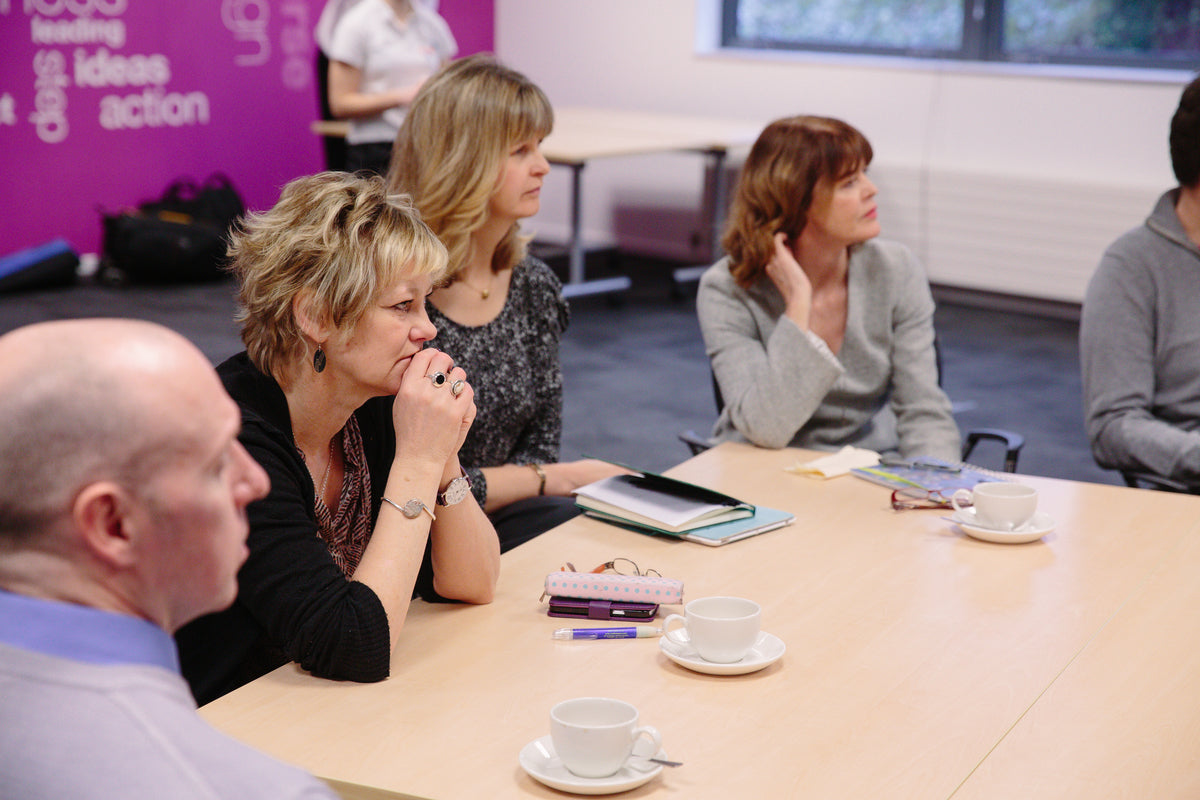
Cala Homes, the UK’s Housebuilder of the Year in 2012, celebrated record success and growth in 2013. Significant recent investment and expansion allowed the company to create ambitious but achievable growth plans and, as part of their drive to create an innovative and forward looking culture they asked RSVP Design to support a new type of annual staff conference. The desire was for an interactive event, to replace the traditional ‘information briefing’ that had been organised in previous years. The briefing took place on separate days in two locations for the staff based in England and in Scotland, with the larger Scottish event being attended by almost 200 people. The theme that was identified was ‘thinking differently’. Built into this were three key messages: look for small innovations that move things forward in a positive and productive way explore ways of improving performance by seeking new solutions to old problems work across teams and perceived boundaries to share information and organisational learning. RSVP Design integrated three table top activities into the design of the day, ensuring that the key messages from speakers in the senior management team were illustrated in practice during the activities. The day opened with every participant taking part in a simple and entertaining practical task in which pairs of people were connected by rope links and challenged to find a way of freeing themselves within the rules of the activity - harder than it sounds! As pairs found correct solutions, the learning was passed around the room until everyone had completed the task successfully. This was a lively opening to the day, raised energy levels and illustrated the importance of sharing learning in order to achieve organisational success. A second activity, ‘Seeing the Point’, further illustrated how individuals and teams can limit their thinking by looking for obvious solutions and how, with some creativity and a willingness to experiment, can achieve ‘more with less’. The final exercise, RSVP Design’s Simbols exercise, became a competitive challenge as 9 teams aimed to problem-solve and organise the implementation of their solutions against the clock. A degree of enjoyable but productive chaos ensued and a number of the teams proved that even in difficult environments, good communication, teamwork and a carefully developed and well-organised strategy will deliver success. The feedback from the event was that it was engaging, motivational and coherent and that the activities reinforced the positive messages that ran through the business content of the rest of the day. Further Information To learn more about how we can help you to integrate or facilitate powerful, experiential learning activities in your training, please contact sales@rsvpdesign.co.uk or call +44 141 561 0387
Read more
Guilford County Schools, Greensboro, North Carolina, USA
GCS is the third-largest district in North Carolina, serving more than 72,300 students across 127 schools in urban, suburban and rural areas. The district is divided into four regions, each with its own regional superintendent, office and support staff to provide personal attention to our schools. Because it is a larger district, GCS are able to offer opportunities that smaller districts, charter and private schools just can't. They have 47 magnet and choice schools with 54 programs, from Science, Technology, Engineering and Math (STEM) to performing or visual arts, advanced academics, Spanish immersion, Montessori, health sciences or aviation. They also offer 192 Career and Technical Education courses in 50 schools, including programs in culinary arts, business, nursing, computers and automotive technology, among others. High schools across GCS offer more than 29 Advanced Placement courses. These college-level classes prepare students for the higher-level courses they will take after graduating from high school and moving on to colleges and universities. GCS also offers the prestigious International Baccalaureate program at four high schools - and it's open to all students who qualify. Only a small number of districts in North Carolina are authorized by the International Baccalaureate Organization to offer the Diploma Programme, and GCS has been a part of it since 1996. Personalizing learning is a key value, and GCS are committed to personalizing learning for each of their students. The Strategic Plan 2016: Achieving Educational Excellence: Personalizing Learning focuses on reaching each student at his or her academic or interest level, then providing the tools to move them ahead. Coaching School Principals, Teacher Leaders and New Teachers GCS has a dedicated team of 13 within their Talent Development Centre, providing coaching support and on-going professional training to educators in schools. RSVP Design were asked to work with this team to help them to prepare professional development programs to be run as summer retreats in 2015, for three groups: 120 Teacher Leaders, 50 School Principals and 40 newly recruited teachers. GCS had already invested in a wide range of RSVP Design’s experiential learning tools and wanted to ensure that they made the best use possible of these exciting resources. RSVP Design’s involvement in the Program Ann Alder, RSVP Design’s specialist in the training of trainers and teachers, was invited to work with the team over 4 days. Part 1: Learning Objectives (2 days) To develop a consistent understanding of the principles that underpin experiential learning, in order to create confidence in choosing and using experiential learning activities within development programs To explore a range of methods of selecting, running and de-briefing experiential activities in order to achieve specific learning objectives To gain in-depth understanding of the available RSVP Design activities and to practice using them in different ways and in different contexts To understand how to apply learning from the activities in other contexts and environments Learning Objectives (2 days) To establish clearly defined learning objectives and outcomes for two x 3-day retreats To co-create programme outlines which will integrate experiential activities into strategic discussions and planning workshops To consider how to facilitate these retreats, in order to achieve benefits for all of the participants The integration of RSVP Design’s resources and skills It was clear, initially, that the focus of this 4 day event was on a transfer of training expertise from RSVP Design to the GCS education team, so that they could apply it in their program design. What was unexpected was the extent to which the event also became an intense team development experience for those involved, addressing issues of trust, teamwork, knowledge-sharing, strategic planning and leadership. Ann believes firmly that the best way to discover the power and potential of the learning tools is by experiencing them first hand. As the team members worked through the activities, then reviewed their own learning, patterns of behavior began to emerge that they recognized from their day-to-day working relationships and systems. Some of these were positive and productive and some were less useful. The development planning that the team undertook during the program, and have committed to continuing after the event, was a major and surprising extra benefit from the training The RSVP Design content Day 1 was an introduction to the underpinning theory behind RSVP Design’s work: the models, theoretical frameworks and principles of learning design that we use to ensure learner engagement and powerful learning that will be retained and applied. This was done through practical experience, eg. introducing ideas about ‘the learning process’ through the experience and debrief of Challenging Assumptions, a puzzle that requires many assumptions to be explored as ‘old learning’ is put aside and new solutions developed. Colourblind® - a team exercise in achieving common meaning through the use of verbal communication - allowed the participants to become more aware of how the activity and debrief can be used to draw out multiple learning points and how important it is to have clearly defined learning objectives to keep both the trainer and learners focused on their specific learning needs. In order to demonstrate the need to apply learning from one context into a similar but more challenging one, the participants moved on to the Simbols activity. Working as sub-teams, they applied the speaking and listening skills, and use of language to achieve shared meaning, that they had learned in Colourblind®. They added in the requirement to develop an operational plan, under tight time constraints and to ensure that every individual was well briefed. The team’s failure to meet the time deadline illustrated a development need that they recognised and led to an exploration of the nature of leadership in different contexts. Learning from this exercise was applied in Minefield, which has the added advantage of introducing issues of competition and collaboration. Day 2 continued to focus on selected RSVP Design tools and as new activities were introduced, their potential for sensitising learners to important issues and providing them with a safe practice ground to rehearse and refine specific skills became more obvious. For example, whilst half the team worked on Sequencer as an exercise in project planning and time management (which brought to light many of the team’s own ineffective patterns!) the other half of the team acted as 1:1 observers. Following the general review of the activity, the observers met with their partners to provide a structured session of feedback and peer coaching, based upon their observations of input, contribution and effectiveness during the activity. This served two purposes, developing observation and feedback skills as well as demonstrating how a practical task can be used to generate personalized learning. As they worked through their chosen exercises, Ann introduced a wide range of different techniques for debriefing and drawing our individual and group learning. These included visual resources such as picture cards, kinaesthetic techniques such as group lineouts and description of emotional responses and activities such as grafitti sheets and post-it exercises to ensure maximum participation. Examples of structured learning review and future planning tools such as the Voyage Mapping facilitation tool were also explored. Throughout the 2 days, as the participants explored their resources and ways of applying them, they were able to begin to visualise how they could be integrated into the different tea RSVP Design’s facilitation support Days 3 and 4 of the programme were used to work in small groups to plan the three separate teacher retreats. Ann offered a design framework which all three groups adopted and then allowed them to work independently, responding to questions, coaching and suggesting possible input as required. The atmosphere buzzed: ideas were developed, improved and gradually three exciting and challenging programme designs emerged. Each one followed the principles of good learning design and each one was tailored to the very different needs of the three participant groups. For the School Principals, a programme developed exploring how they could use the very simple Action Centred Leadership model to balance the leadership demands made upon them in challenging school environments. For the Teacher Leaders, who face significant change in their role and relationships, a programme was devised using the Voyage Mapping metaphor and movie-making to action plan for the year ahead. And for the new teachers, experiential activities were designed into two important strands: a) managing themselves and their ongoing learning whilst experiencing the pressures and stresses of a new job and b) using their creativity to ensure that they offer engaging, challenging and interactive experiences to the children in their care. Feedback from the program “Our team had the opportunity to spend four days with Ann Alder, learning how to maximize our usage of numerous RSVP tools. Ann was amazing! Not only did we learn how to facilitate the RSVP tools, the experience changed the way our team will interact, communicate, plan, and design adult learning experiences forevermore. The learning tools were so well designed and easy to use. They are far more versatile than we ever imagined and it was Ann’s training that allowed us to realize how many applications each of them offer. Some of our favorites were Sequencer, Simmetrics, Minefield and Colorblind. Our only regret is that we did not work with Ann sooner!” Amy Holcombe, Ph.D. Executive Director of Talent Development, Human Resources, GCS Further Information To learn more about how we can help you to integrate or facilitate powerful, experiential learning activities in your training, please contact sales@rsvpdesign.co.uk or call +44 141 561 0387
Read more