

If we ask which of the 7 items on our Employability Skills list is most important, many organisations would say that Role Related Technical Skills are key to realising the dual imperatives of Commercial and Employee Growth. I fully concur with this, it's vital that every employee knows how to do their job effectively, efficiently and safely. But consider the situation where we need to address a workforce, or an individual, not wholly motivated towards workplace learning opportunities, and you're faced with what is often the hardest sell. Why should an individual commit energy to developing a set of very specific skills if they think that these skills are exclusively for the benefit of their employer? This is where a bit of motivational psychology is needed; we need to sell the learning opportunity in a way that the personal benefits to the individual apparently outweigh the commercial benefits to the organisation.
In my opinion the best approach to this is to design a learning intervention that bundles the technical skills development with some of the other components of the Employability list I offered in my last post. This allows the creation of programming that has a strong sense of personal development for the participants - growing employability skills that each individual can utilise in their own career development. Emphasising this individual skills-building when introducing the initiative should make a positive impression on participants who might otherwise be sceptical, or even resistant, to content that is seen as simply benefitting the employer.
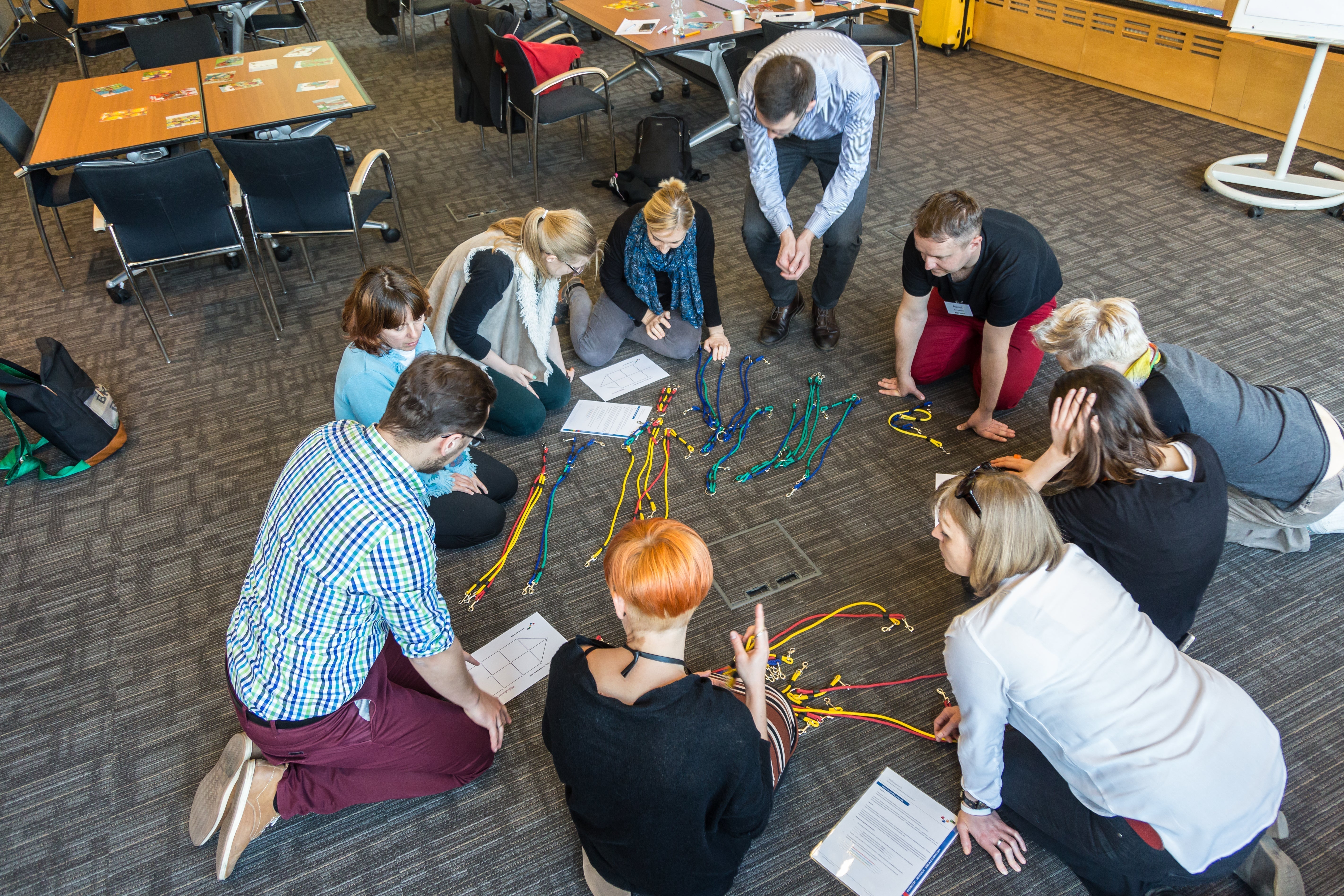
An example of how this might be done is to include an experiential activity that builds one of the Employability skills e.g. Problem Solving or Team Working without prefacing the activity with any mention of the workplace setting that these skills might be deployed. Then in the debrief of the activity we might introduce a question sequence such as "Where in your daily job might this skill be useful?", then "What would you have to change that would allow you utilise the skill?", then "What else might you need to know that would allow you to utilise this skill?".
At this point (and maybe with a bit of prompting) the answers should give you a green light to introduce the content that covers the Role Related Technical Skills. Importantly you're now delivering this content to a receptive audience who have identified for themselves the need for this learning. Within RSVP Design we refer to this as a 'sensitised' audience - the experiential content has made them aware of the benefits of the taught content that comes next.
In my next post I'll look at a different way of structuring your content to achieve the same result, but through a different process.


